The 24-hour collection terminal: growth opportunity or cost trap?
Collecting medicines around the clock without anyone standing behind the counter: more and more Swiss pharmacies are installing 24-hour collection terminals. For Toppharm businesses such as the Sonnen Apotheke or the Wartau Apotheke the terminal has long been part of everyday life. But is the investment worthwhile for the average community pharmacy too? A sober look at benefit, law, cost and suppliers.
Key points
- A collection terminal extends availability to 24/7 without increasing personnel costs.
- Legally, collecting reserved medicines (including prescription-only ones) by code is permissible — free sale from the machine remains restricted to list E.
- Purchase costs roughly 12,000–24,000 euros depending on the number of compartments; rental models start below 1,000 euros a month.
- The terminal does not replace the emergency service, but it retains customers and prevents migration to mail order.
Why 24-hour collection is suddenly an issue
Customer expectations have shifted. Anyone who orders online around the clock and is delivered the next day understands less and less why a reserved medicine lies unreachable behind a locked shop door after 6.30 p.m. or on a Sunday. This is exactly where 24-hour collection terminals come in: they extend the pharmacy’s effective availability to seven days and 24 hours, without additional staff having to be present.
Swiss pioneers show how it works. The Toppharm Sonnen Apotheke deposits pre-ordered medicines in the terminal; the customer receives a personal code by e-mail and can collect at any time — payment by card or Twint directly at the machine included. The Wartau Apotheke works on the same principle: an individual code, collection around the clock, independent of opening hours. The basic idea is always the same — counselling and the dispensing decision happen in the pharmacy as usual; only the physical handover is decoupled in time.
A collection terminal is not a picking robot
Before discussing costs, it is worth clarifying terms, because two entirely different investments are regularly confused here.
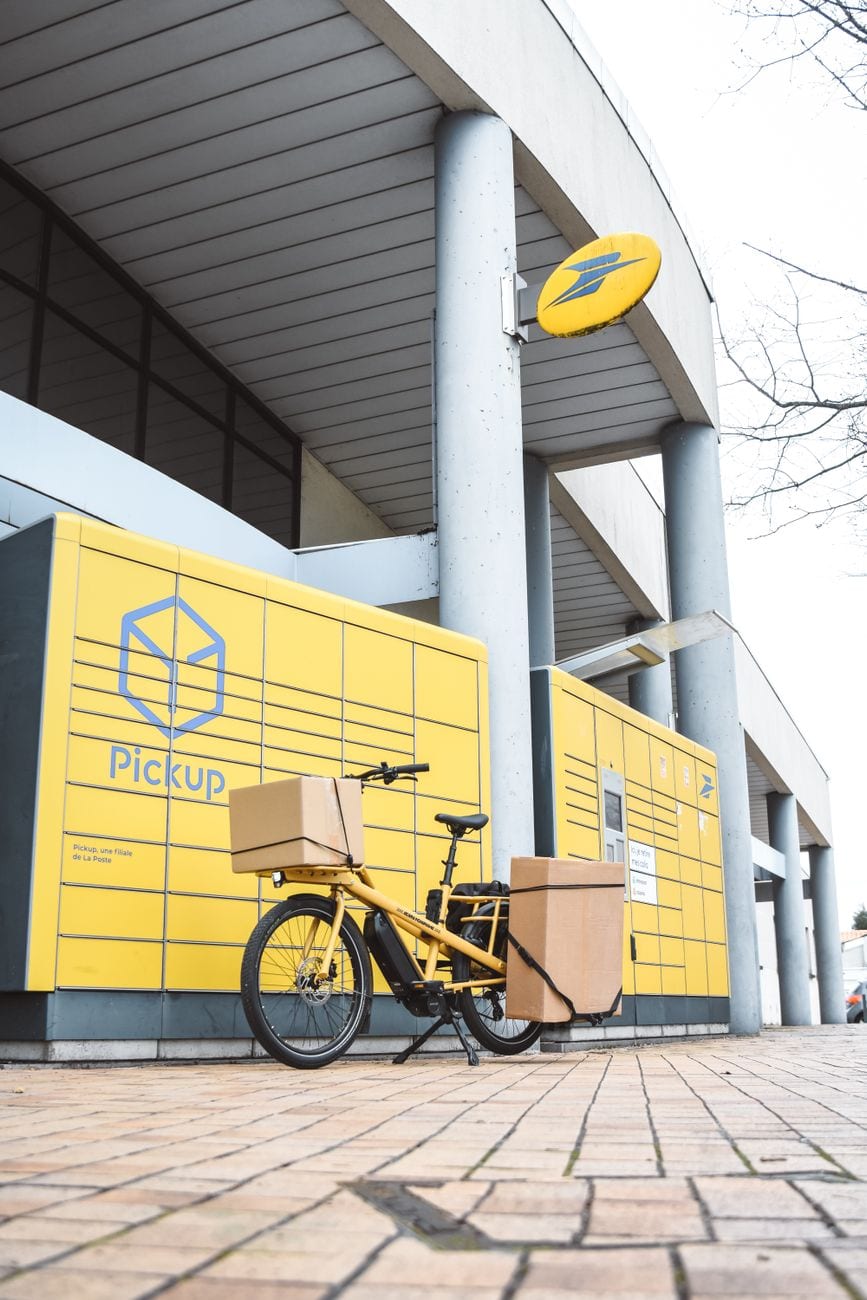
The picking robot (storage robot) stands inside, accelerates stock management and, depending on configuration, quickly costs six-figure sums. The collection terminal, by contrast, is a lockable compartment system in the façade or in a 24-hour vestibule, which organises the handover alone. The two can be coupled — the robot fills the collection compartment — but should be assessed separately. The growth idea discussed here concerns the collection system alone.
What applies legally in Switzerland
The decisive point for admissibility is the distinction between collection and sale.
With the collection of reserved goods, the professional has already checked the medicine, validated the prescription where applicable and offered counselling. The terminal merely handles the handover — even with prescription-only preparations on lists A and B this is the viable route, because pharmaceutical responsibility has been exercised beforehand.
Free sale directly from the machine, without staff involvement, remains narrowly limited. Since the reorganisation of the dispensing categories in 2019 (with list C abolished), only medicines on list E may be dispensed without professional counselling. Everything assigned to list D requires professional counselling and is therefore unsuitable for anonymous machine sale. Anyone wanting to run the terminal as a small “round-the-clock self-selection area” should restrict the range to over-the-counter products and medical devices.
Because implementation is judged differently from canton to canton, early consultation with the cantonal pharmacist is not a bureaucratic side issue but the first step. The legal service of pharmaSuisse also supports pharmacies with detailed legal questions.
What such systems cost
Reliable Swiss list prices are rare, because suppliers quote individually. Prices from the German-speaking market, which can largely be transferred, provide guidance.
- Purchase: depending on the number of compartments, machines cost roughly 12,000 to 24,000 euros. The smallest variant offers around 15 compartments; the large double modules up to 180.
- Rental: entry-level systems are offered from under 1,000 euros a month — service included. That turns the investment into a predictable operating expense and lowers the barrier to entry.
- Additional costs: a façade opening or mounting, connection to stock management, a payment terminal (card/Twint) as well as ongoing maintenance and cleaning have to be factored in.
The business logic is compelling: a collection terminal creates availability without additional personnel costs — and personnel is, as is well known, the pharmacy’s largest cost block. Some businesses even use it to tighten marginal opening hours without worsening the service.
Who supplies such terminals
In the German-speaking market, PSS – Pharma Service Systeme has established itself as a specialised supplier, with a model range from 15 to 180 compartments as well as emergency service and sales modules; according to the manufacturer, around 1,000 systems are already in use. From the robotics side comes Becton Dickinson / Rowa with “Rowa Smart” as an entry-level variant that can be coupled with existing picking robots. Alongside these, numerous general dispensing and locker machine manufacturers exist. For Swiss businesses it is advisable to prefer suppliers with local service, Twint integration and connection to the pharmacy software systems common in this country.
Experience from practice
Feedback from businesses that have worked with collection compartments for some time is predominantly positive: customers collect ordered medicines after closing time or at weekends, the delivery service is relieved, and loyalty to the regular pharmacy increases — an effective antidote to migration to mail order. But points of friction are reported too: technical faults, unclear codes or cold chain questions with temperature-sensitive preparations lead to queries. Anyone starting without active customer communication risks the terminal simply going unused.
What you should clarify before purchasing
- Cantonal authorisation: consult the cantonal pharmacist before signing any contract.
- Location: a façade with passing trade, lighting, weather protection and barrier-free access.
- Cooling: are refrigerated compartments necessary? That markedly increases price and maintenance.
- Process: how does the reservation get into the terminal, how is the code transmitted securely, how is payment handled?
- Range strategy: collection of reserved goods only — or additionally direct sale of list E products?
- Communication: website, signage and actively raising it at the counter decide whether it is used.
- Financing: purchase, leasing or rental — calculated over time against the presence costs saved.
Conclusion
The 24-hour collection terminal is no substitute for the emergency service and no money-printing machine — but it is a well-considered instrument for improving availability, customer loyalty and efficiency at the same time. It extends service hours without touching the pharmacy’s largest cost block, and positions the pharmacy as a modern, available point of contact. What is decisive is to calculate the investment soberly, clarify the legal framework properly with the canton and actively bring customers along. Then a piece of façade technology becomes a genuine lever for growth.
References
- Toppharm Sonnen Apotheke – Unser Verkaufs- und Abholautomat. https://www.toppharm.ch/sonnen/blog/unseren-verkaufs-und-abholautomaten
- Wartau Apotheke – 24h Abholautomat. https://www.wartauapotheke.ch/serviceleistungen/abholautomat_24h
- PSS – Pharma Service Systeme GmbH – 24h-Abholsysteme für Apotheken. https://lav-sofo-markt.de/24h-abholsysteme
- APOTHEKE ADHOC – Berichte und Anwendererfahrungen zu Apotheken-Abholautomaten (PSS, Rowa Smart). https://www.apotheke-adhoc.de
- Bundesamt für Gesundheit (BAG) / pharmaSuisse – Abgabekategorien und erleichterte Abgabe von Arzneimitteln (Listen B, D, E). https://www.bag.admin.ch