Supplementing iron correctly — between tiredness, myth and modern therapy
Iron is among the most frequently supplemented micronutrients worldwide and at the same time one of the most misunderstood. Counselling on iron preparations has long been part of everyday pharmacy work: tiredness, difficulty concentrating, hair loss or reduced performance lead many patients straight to the iron shelf. But when is supplementation actually appropriate? Which preparations differ in absorption and tolerability? And why does “less is more” apply more and more today?
Why iron is so central
Iron is essential for oxygen transport, cellular respiration and numerous enzymatic processes. Around 60–70 % of the body’s iron is found in the haemoglobin of red blood cells. Beyond that, iron plays an important role in energy metabolism, immune function and neurological development.¹
Iron deficiency often develops insidiously. Those particularly affected are women of childbearing age, pregnant women, adolescents, older people, vegetarians and patients with chronic inflammatory bowel disease or malabsorption syndromes.²
Typical symptoms — often non-specific
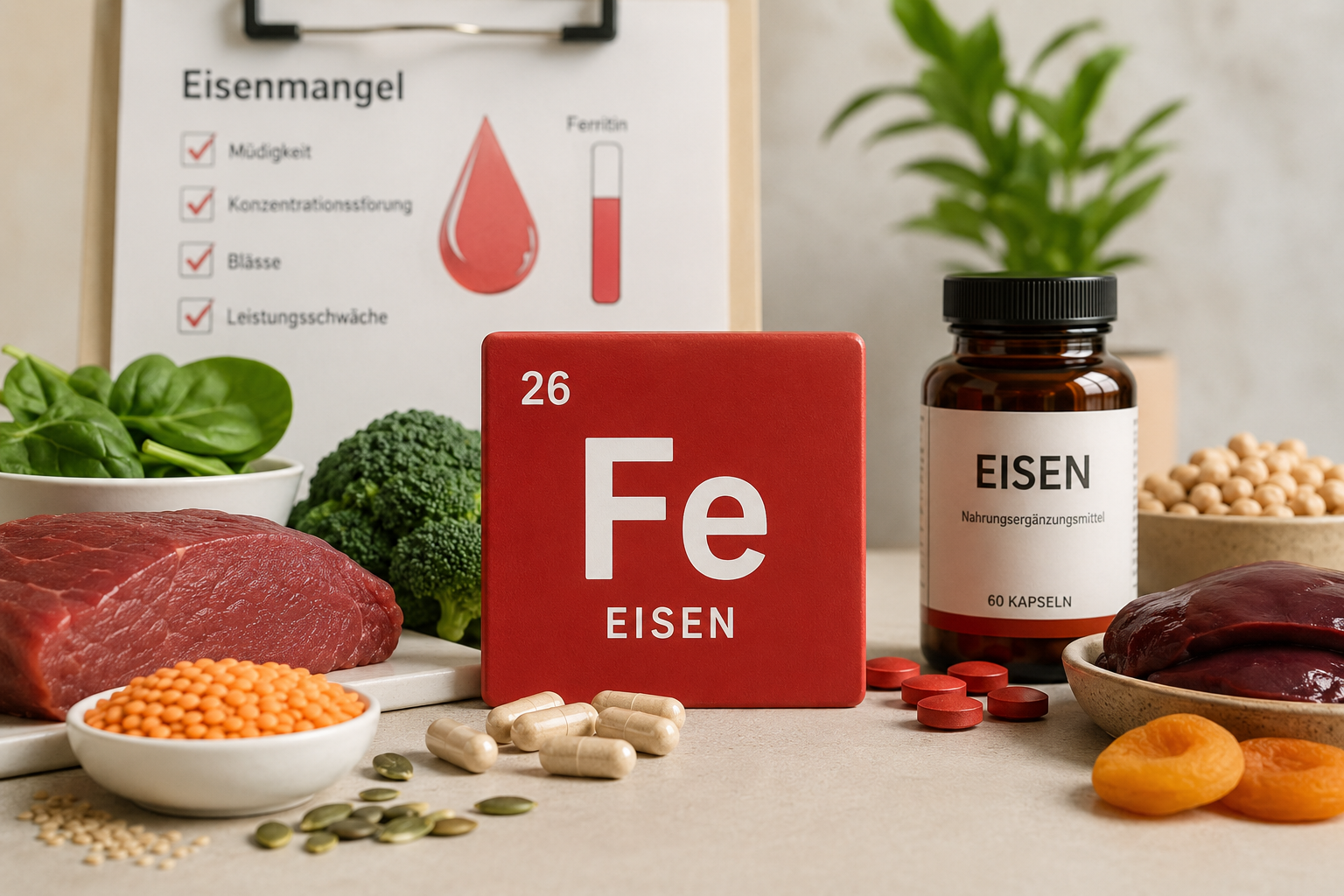
The complaints of iron deficiency are frequently diffuse. Classic symptoms include:
- tiredness and exhaustion
- difficulty concentrating
- reduced performance
- hair loss and brittle nails
- headache or dizziness
- restless legs syndrome
- exertional dyspnoea in anaemia²
What is decisive, however, is this: symptoms alone are not sufficient grounds for supplementation. Laboratory assessment should precede any therapy, in particular ferritin, haemoglobin and transferrin saturation.²
Oral first: the gold standard of iron replacement
In symptomatic iron deficiency with or without mild anaemia, oral iron preparations remain the therapy of first choice.³ They are easy to use, cost-effective and available in various galenic forms.³
A basic distinction is made between:
- iron(II) salts (e.g. ferrous sulphate, ferrous fumarate)
- iron(III) complexes (e.g. iron polymaltose, ferric maltol)
Divalent iron has higher bioavailability but more frequently causes gastrointestinal side effects such as nausea, constipation or abdominal pain.⁴ Trivalent compounds are often considered better tolerated, but in part show lower absorption.⁴
The paradigm shift: why lower doses can make sense
For a long time the maxim was to replace as much iron as quickly as possible. More recent findings show, however, that high daily doses can paradoxically worsen iron uptake.⁵
The reason lies in the body’s own regulatory hormone hepcidin. After higher iron doses are taken, hepcidin levels rise and block iron absorption in the gut for around 24 hours. Iron taken subsequently is therefore absorbed less well.⁵
The following strategies are consequently recommended more and more today:
- lower doses
- taking iron every other day
- taking it on an empty stomach for better absorption
- combining it with vitamin C⁵
These approaches frequently improve both bioavailability and tolerability.⁵
Diet and interactions: counselling makes the difference
Iron uptake can be influenced considerably. Vitamin C promotes absorption, while coffee, black tea, cocoa, calcium or certain medicines can inhibit it.⁶
Important counselling points in the pharmacy:
- if possible, do not take iron together with coffee or dairy products
- observe an interval from proton pump inhibitors, tetracyclines or bisphosphonates
- in case of gastrointestinal complaints, consider taking it with a small meal
- continue therapy over several months in order to replenish iron stores⁶
Because even after haemoglobin has normalised, iron stores often remain depleted.⁷
When are iron infusions appropriate?
Intravenous iron preparations should not be used lightly. They come into consideration in particular for:
- intolerance of oral preparations
- severe iron deficiency anaemia
- absorption disorders
- chronic inflammatory bowel disease
- chronic renal insufficiency
- the need for rapid correction of iron deficiency⁷
Despite modern preparations, intravenous therapy remains associated with risks such as allergic reactions or iron overload.⁸ Professional societies therefore emphasise that iron infusions should only be given on a clear indication.⁷
Conclusion for pharmacy practice
Iron supplements are among the most requested products in the pharmacy, and at the same time the counselling is demanding. What matters is not only the choice of preparation, but also the right dose, the intake strategy and the diagnostic assessment.
Modern iron medicine is increasingly leaving the principle of high-dose therapy behind. Individualised dosing, better tolerability and evidence-based indications are moving to the foreground instead. For pharmacists this opens up an important opportunity: well-founded counselling instead of blind supplementation.
References
- Burgerstein Foundation. Eisenpräparate – weniger ist mehr. Burgerstein Foundation, 2023.
- FMH Schweiz. Guideline Eisenmangeldiagnostik und Therapie. Schweizerische Gesellschaft für Hämatologie, 2023.
- mediX Schweiz. Eisenmangel bei Erwachsenen – Diagnostik und Therapie. mediX Guideline, 2022.
- DocCheck Flexikon. Eisensupplementation. Medizinisches Fachlexikon, abgerufen 2026.
- Stoffel NU, Zeder C, Brittenham GM et al. Iron absorption from supplements is greater with alternate day than with consecutive day dosing in iron-deficient anemic women. Lancet Haematology. 2017;4(11):e524–e533.
- Blutspende SRK Schweiz. Ernährung bei Eisenmangel. Schweizerisches Rotes Kreuz, 2024.
- Onkopedia Leitlinie. Eisenmangel und Eisenmangelanämie. Deutsche Gesellschaft für Hämatologie und Medizinische Onkologie, 2023.
- Pharmazeutische Zeitung. Eisensubstitution – Das ist zu beachten. Pharmazeutische Zeitung, 2023.