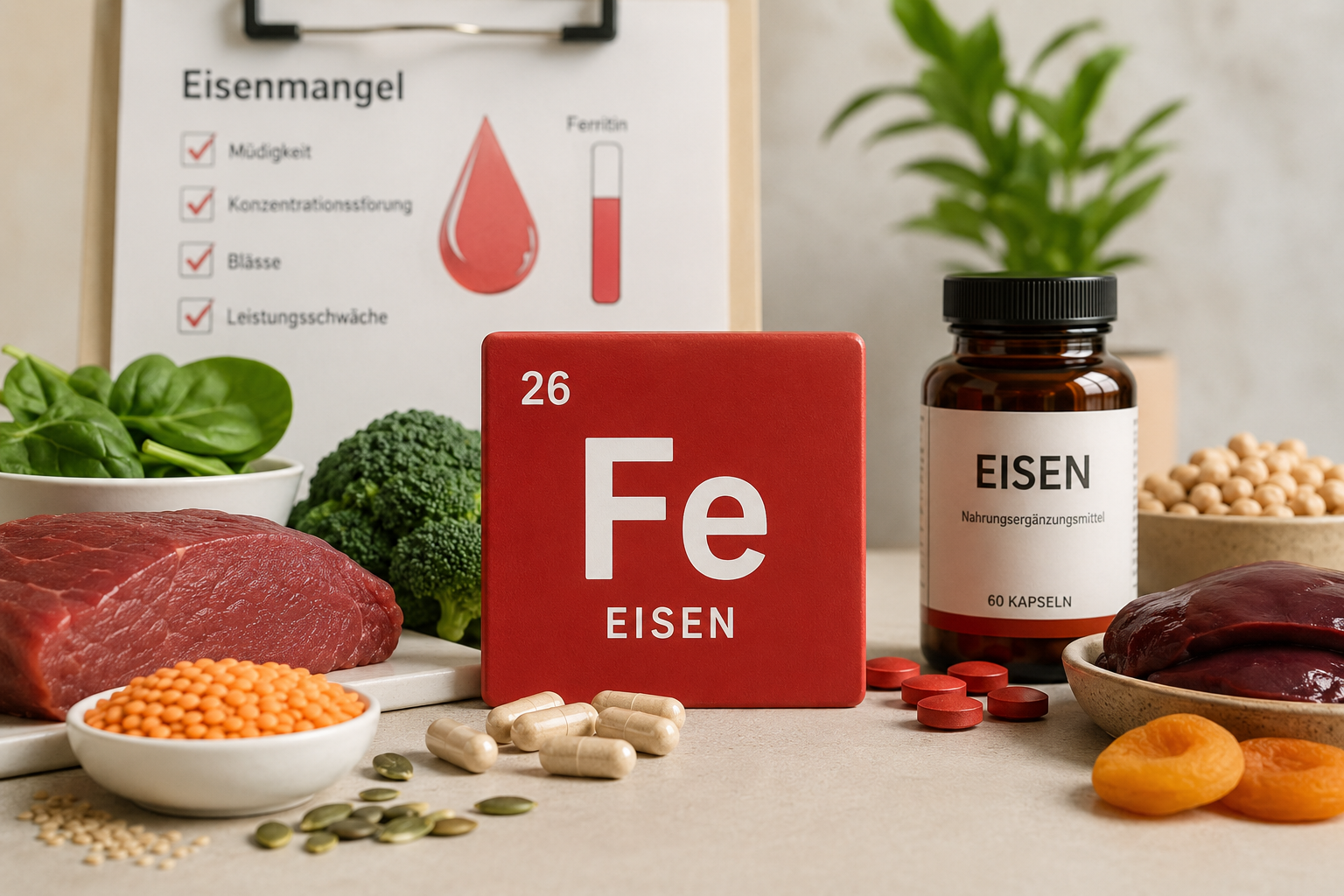
Iron deficiency in women. More than just fatigue
Fatigue, difficulty concentrating and declining performance are among the most common complaints women bring to the pharmacy. Behind them there may be an iron deficiency that often remains undetected for a long time and already causes symptoms before anaemia develops. New findings on ferritin, hepcidin and oral dosing regimens are changing therapy and make the pharmacy an important point of contact for evidence-based counselling.
A deficiency with many faces
Iron is frequently associated almost exclusively with the formation of red blood cells. In fact its significance reaches considerably further. The trace element is a component of haemoglobin and thus indispensable for oxygen transport. But it is also needed for mitochondrial energy production, DNA synthesis, various enzymes, immune function and the formation of neurotransmitters. A deficiency can therefore impair numerous bodily functions before changes in the blood count appear.¹ ²
The human organism cannot actively excrete iron. Small amounts are lost through the skin, mucous membranes and the gastrointestinal tract. In women, blood loss through menstruation is added. The body therefore regulates its iron stores mainly through absorption in the small intestine and the recycling of iron from aged erythrocytes. If more iron is lost than absorbed over a longer period, the stores empty first. Only later is there no longer enough iron available for haemoglobin formation and iron deficiency anaemia develops.¹ ³
This stepwise progression explains why a normal haemoglobin does not rule out iron deficiency. In the early stage the blood count can still be entirely unremarkable, even though the ferritin concentration has already fallen and the patient is developing symptoms. In practice a distinction must therefore be made between iron deficiency without anaemia and manifest iron deficiency anaemia.³
Why women are particularly often affected
Menstruation is one of the most frequent causes of chronic iron loss. How much blood a woman loses during her period can hardly be reliably measured in everyday life. Medically, heavy menstrual bleeding is therefore no longer defined solely by a particular volume of blood. What is decisive is whether the bleeding impairs physical, social or occupational quality of life. Indications are bleeding over many days, very frequent changing of hygiene products, bleeding through at night, larger blood clots or the need to use a tampon and a pad at the same time.⁴
Behind heavy bleeding there may be fibroids, adenomyosis, clotting disorders or other gynaecological causes. Endometriosis is associated above all with cycle-dependent pain and can occur together with heavy or irregular bleeding. If a woman regularly needs analgesics because of pronounced period pain, describes pain during intercourse or repeatedly has to restrict work and daily life because of her complaints, one should think not only of iron deficiency but also of an underlying gynaecological condition.⁵
Further risk factors are a vegetarian or vegan diet without careful food selection, frequent blood donation, intensive endurance sport, coeliac disease, chronic inflammatory bowel disease, bariatric procedures and long-term use of proton pump inhibitors. Regular gastrointestinal blood loss, for example under non-steroidal anti-inflammatory drugs, can also contribute to iron deficiency.¹ ⁶
For the pharmacy it is decisive not to accept a single risk factor prematurely as the explanation. Heavy menstruation can make iron deficiency plausible, but does not automatically rule out an additional absorption disorder or a gastrointestinal source of bleeding.
The cycle changes symptoms more than iron status
The various phases of the menstrual cycle are increasingly being included in health counselling. For iron balance it is above all the bleeding itself that is relevant. During menstruation iron is lost. In the follicular phase that follows, complaints such as exhaustion or headache return to normal in many women. Where iron stores are already depleted, however, performance can remain impaired throughout the entire cycle.
Complaints in the luteal phase can overlap with symptoms of iron deficiency. Fatigue, reduced resilience, headache, sleep problems and difficulty concentrating are frequently attributed to premenstrual syndrome. If they occur independently of the cycle phase, however, or increase over several months, iron status should be taken into account.
A small study from 2026 examined ferritin, hepcidin, transferrin and haemoglobin in different cycle phases in female athletes. It found no clear phase-dependent differences in the most important storage parameters. The cycle phase therefore appears to be less significant for the interpretation of ferritin and haemoglobin than factors such as inflammation, intensive training load or long-term blood loss. The study was small, however, and does not allow a generally valid statement for all women.⁷
In practice this means that a blood sample does not in principle have to be postponed to a particular cycle phase. For follow-up checks it is nevertheless sensible to create comparable conditions and not to determine laboratory values immediately after an acute infection or unusually intensive sporting exertion.
Pregnancy and the postpartum period as sensitive phases
During pregnancy the iron requirement rises considerably. Iron is needed for the increase in maternal erythrocyte mass, for the placenta and for the development of the child. At the same time the ferritin concentration frequently falls over the course of pregnancy. An undersupply already present before conception can therefore worsen rapidly.
The expert letter of the Swiss Society of Gynaecology and Obstetrics points out that iron deficiency is observed in up to 32 per cent of pregnant women in Switzerland. The updated Swiss recommendation defines empty iron stores in pregnancy as a rule by a ferritin below 30 micrograms per litre and provides for oral therapy as the primary approach in mild iron deficiency anaemia. The decision on preparation, dosage and duration in pregnancy nevertheless belongs under medical supervision.⁸
After the birth, blood loss, depleted stores and the physical demands of the postpartum period can come together. Fatigue is then easily explained by lack of sleep and the new life situation alone. Pronounced exhaustion, breathlessness on exertion, palpitations or dizziness should not, however, be trivialised as normal accompaniments of the postpartum period.
Perimenopause and menopause
In the perimenopause, cycles frequently become more irregular. Individual bleeds may be missed, others may be unusually long or heavy. The risk of iron deficiency can therefore even rise temporarily. Women between about 40 and 55 who newly suffer from exhaustion should therefore not automatically be reduced to menopausal complaints alone.
After the menopause, regular menstrual blood loss ceases. Newly occurring iron deficiency or iron deficiency anaemia must then be carefully investigated. Gastrointestinal bleeding, coeliac disease, chronic inflammation and malignant disease in particular must be excluded. Longer-term self-medication without a clarified cause is not appropriate in this phase of life.¹ ⁶
Symptoms: typical, but not specific
Frequently named symptoms of iron deficiency include fatigue, reduced performance, difficulty concentrating, headache, dizziness, feeling cold, pallor and breathlessness on exertion. Hair loss, brittle nails, cracked corners of the mouth, restless legs symptoms and an unusual craving for ice or other inedible substances can also occur.³
None of these symptoms proves iron deficiency on its own. Thyroid dysfunction, vitamin B12 deficiency, sleep disorders, depression, chronic infections and numerous other conditions can cause a similar picture. Hair loss too has many possible causes and must not automatically be equated with a low ferritin value.
The severity of complaints moreover does not always correlate directly with the ferritin concentration. Some women with very low stores report only minor symptoms, while others are markedly impaired already at a moderate reduction. Laboratory values must therefore always be assessed together with complaints, risk factors and possible underlying conditions.
Iron deficiency without anaemia: what is actually documented?
That iron deficiency can cause complaints before haemoglobin falls is now regarded as plausible and clinically relevant. The evidence is, however, more differentiated than some advertising claims suggest.
In a Swiss double-blind study, 144 non-anaemic women with unexplained fatigue received either 80 milligrams of elemental iron daily or placebo for four weeks. Fatigue decreased more under iron. The effect appeared in the subgroup analysis in women with ferritin values up to 50 micrograms per litre. This observation does not, however, mean that every symptomatic woman should aim for a ferritin value of at least 50. The study examined a selected group over a short period and defined no universal target value.⁹
Other studies did not consistently reach the same conclusions. In non-anaemic female blood donors with iron deficiency, laboratory values improved under iron without a significant effect on fatigue being demonstrable.¹⁰
The correct conclusion is therefore not to treat fatigue generously with iron. Rather, iron supplementation can be sensible in selected symptomatic women with a laboratory-confirmed deficiency. Treatment on the basis of non-specific complaints or of an arbitrarily set desired value alone is not scientifically justified.
Diagnostics: ferritin is important, but not infallible
Ferritin is the most important laboratory parameter for assessing iron stores. In healthy adults the World Health Organization defines a ferritin concentration below 15 micrograms per litre as iron deficiency. In clinical reviews and many treatment algorithms, a value below 30 micrograms per litre is frequently already regarded as compatible with iron deficiency in people without inflammation.¹¹ ¹²
These different thresholds do not necessarily contradict one another. The WHO value has a high specificity for completely or largely exhausted stores. A threshold of 30, by contrast, increases sensitivity and is therefore frequently used in clinical care. Between 15 and 30 micrograms per litre, iron deficiency is very likely. Above that, the interpretation depends more strongly on symptoms, inflammatory status and concomitant conditions.
Ferritin is an acute-phase protein. In infections, chronic inflammation, liver disease and malignant disease it can rise even though the tissue does not have enough iron available. For adults with inflammation the WHO names a considerably higher threshold of 70 micrograms per litre. This value must not, however, be used in isolation or as a universal treatment threshold. It serves to capture the risk of a hidden iron deficiency in an inflammatory context better.¹¹
Where there is suspicion, at least a blood count and ferritin should therefore be determined. In unclear situations, transferrin saturation and C-reactive protein are additionally helpful. A transferrin saturation below 20 per cent supports the diagnosis, particularly where ferritin could be distorted by inflammation. In special cases the soluble transferrin receptor protein or reticulocyte haemoglobin can provide additional information.¹ ¹²
The mean corpuscular volume and the mean corpuscular haemoglobin can also remain normal for a long time. Microcytosis and hypochromia are rather signs of an advanced deficiency and are not suitable for ruling out an early stage.
A single ferritin value should moreover not become a supposed optimisation parameter. There is no generally accepted recommendation that every woman must reach a value above 50, 70 or 100 micrograms per litre. What is treated is a documented deficiency, a medically relevant symptom picture and the underlying cause, not an arbitrarily set number.
Hepcidin changes oral therapy
Hepcidin is the central regulatory hormone of iron metabolism. It is formed in the liver and controls the transport protein ferroportin. If hepcidin rises, less iron is absorbed from the gut and less stored iron is released into the circulation. Inflammation raises the hepcidin concentration and can thereby cause a functional iron deficiency.¹³
An oral iron dose also causes hepcidin to rise temporarily. Studies at ETH Zurich showed that consecutive high doses and splitting into several intakes can reduce subsequent iron absorption. In women with depleted stores, iron was proportionally better absorbed when given every other day than with daily intake. A single intake was more favourable than splitting the same daily dose.¹⁴
From this, however, it cannot be concluded that alternate-day intake is fundamentally superior for every patient. A meta-analysis from 2025 found no convincing differences in haemoglobin, ferritin or transferrin saturation between daily and alternate-day intake in the treatment of anaemia. The certainty of the evidence was low. Both regimens can be effective, with alternate-day intake being a good option for patients with intolerance.¹⁵
Particular caution is needed in pregnancy. There the iron requirement is continuously high, and current data do not yet allow a blanket transfer of alternating regimens to all pregnant women. Dosing should be guided by the obstetric recommendations and the individual situation.⁸
Which preparation suits which woman?
Oral ferrous iron salts such as ferrous sulfate, ferrous fumarate and ferrous gluconate continue to be regarded as standard therapy. They are well studied, effective and comparatively inexpensive. Current gastroenterological guidelines mostly recommend a standard tablet once daily initially. If this is not tolerated, intake every other day, a lower dose, a different oral formulation or intravenous therapy come into consideration.⁶
In Switzerland, Tardyferon for example contains 80 milligrams of ferrous iron as ferrous sulfate and ferro sanol 100 milligrams of ferrous iron as an iron glycine sulfate complex. Maltofer contains ferric iron as an iron hydroxide polymaltose complex and is available in various dosage forms. The dosage information in the respective product information is to be observed.¹⁶ ¹⁷ ¹⁸
Ferrous iron salts have the most extensive evidence but frequently cause gastrointestinal complaints. A meta-analysis with more than 6800 adults showed a significantly higher risk of gastrointestinal adverse effects under ferrous sulfate than under placebo or intravenous iron. Typical are nausea, a feeling of pressure, abdominal pain, constipation and diarrhoea.¹⁹
Iron hydroxide polymaltose can be an alternative particularly with a sensitive gastrointestinal tract. In studies during pregnancy, effectiveness was comparable to ferrous sulfate and tolerability in part better. The evidence is, however, less extensive and cannot be transferred without qualification to all patient groups.²⁰
Ferrous bisglycinate is frequently advertised as well tolerated. A meta-analysis of randomised studies found fewer gastrointestinal complaints in pregnant women and a good effect on haemoglobin. For non-pregnant women the data are considerably thinner. Ferrous bisglycinate can be an option in cases of intolerance, but is not to be regarded as generally superior to all classic iron salts.²¹
For liposomal or sucrosomal iron there are interesting data on tolerability. The studies are, however, heterogeneous, in part small and often product-specific. These forms can be sensible in individual cases but do not have the same broad evidence base as classic iron salts. They should therefore not be preferred merely on the basis of a supposedly modern technology.
Preparations compared
| Situation | Possible option | Classification for counselling |
|---|---|---|
| First therapy without known intolerance | Ferrous sulfate, fumarate or gluconate | Best and broadest evidence, frequently first choice |
| Sensitive gastrointestinal tract | Lower frequency or iron hydroxide polymaltose | Tolerability may be better, observe the product information |
| Repeated complaints under iron salts | Ferrous bisglycinate | Promising tolerability, evidence outside pregnancy more limited |
| Wish for a liposomal form | Liposomal or sucrosomal iron | Possible alternative, but no generally documented superiority |
| Severe anaemia, absorption disorder or no response | Intravenous iron | Exclusively after a medical indication has been established |
Intake: as much evidence as necessary, as practicable as possible
Ferrous iron is best absorbed when taken in the morning at a distance from a meal and from coffee. A Swiss study in women with iron deficiency showed that coffee markedly reduced absorption. A moderate amount of ascorbic acid improved it, while a very high dose brought no additional advantage.²²
In practice, however, taking it on an empty stomach is not tolerable for every patient. If it causes nausea or stomach pain, taking it with a small meal is usually more sensible than discontinuing therapy. With iron hydroxide polymaltose, intake with food can take place in accordance with the product information.¹⁸
Coffee, black tea, green tea, larger amounts of calcium and certain wholegrain components can reduce absorption. A gap of roughly two hours is practicable in many cases. At the same time, counselling should not become so complicated that the patient no longer takes the preparation regularly at all.
Iron can influence the absorption of other medicines. Particularly relevant are levothyroxine, tetracyclines, fluoroquinolones and bisphosphonates. The necessary intervals differ by preparation and should be established on the basis of the respective product information or an interaction check. Antacids and proton pump inhibitors can also impair iron absorption.
Dark discoloration of the stool is usual under oral iron and harmless in itself. It must not, however, lead to melaena or other indications of gastrointestinal bleeding being overlooked. Liquid iron preparations can stain the teeth. Taking them with a straw and rinsing the mouth afterwards can reduce this risk.
How long should treatment last?
In iron deficiency anaemia, haemoglobin should rise perceptibly within the first weeks. If a response fails to appear, errors in intake, intolerance, continued blood loss, a misdiagnosis or an absorption disorder must be checked.⁶
After haemoglobin has normalised, therapy is frequently continued for several more weeks or months in order to replenish the stores as well. The exact duration depends on baseline values, cause, preparation and tolerability. Open-ended intake without laboratory monitoring is not sensible.
For follow-up it is not only decisive whether ferritin has risen. Equally important are the clinical response, haemoglobin where anaemia exists and the question of whether the continued iron loss has been treated. With heavy menstruation it is not enough in the long term to keep supplementing iron without addressing the cause of the bleeding.
Nutrition: an important foundation, but rarely sufficient therapy
Haem iron from meat and fish is better absorbed than plant-based iron. Good plant sources are pulses, tofu, nuts, seeds, wholegrain products and certain vegetables. The simultaneous intake of vitamin C can improve the absorption of plant-based iron.
A vegetarian or vegan diet does not inevitably lead to iron deficiency. The risk rises, however, when iron-rich foods are lacking, when overall energy intake is low or when there are additional losses through menstruation and sport. Young women in particular with restrictive dietary patterns should also pay attention to other possible deficiencies such as vitamin B12.
An already pronounced iron deficiency can usually not be corrected rapidly by diet alone. Nutrition nevertheless remains important in order to prevent a renewed emptying of the stores after successful therapy.
When intravenous iron comes into consideration
Intravenous iron may be necessary when oral preparations are not tolerated despite adjustment, do not show a sufficient effect or are barely absorbed because of an absorption disorder. Further possible indications are a pronounced symptomatic anaemia, chronic inflammatory diseases, continued heavy blood loss or the need for rapid replenishment, for example before an operation or in selected phases of pregnancy.¹ ⁶ ⁸
The decision belongs in medical hands. Intravenous iron preparations differ in terms of possible single dose, infusion duration and adverse effect profile. With ferric carboxymaltose, the risk of hypophosphataemia in particular must be taken into account, above all with repeated administration. Intravenous treatment is therefore not a more comfortable variant of self-medication but a targeted medical therapy.
Counselling algorithm for the pharmacy
- Record the complaints
How long have fatigue, a drop in performance, dizziness or difficulty concentrating been present? Are there breathlessness on exertion, palpitations, hair loss, restless legs symptoms or unusual food cravings?
- Ask about blood loss
How long and how heavy is the menstruation? Do hygiene products have to be changed very frequently or combined? Is there intermenstrual bleeding, severe period pain or bleeding after the menopause?
- Check risk factors
To be taken into account are pregnancy, the postpartum period, a vegetarian or vegan diet, blood donation, intensive endurance sport, gastrointestinal disease, bariatric procedures, proton pump inhibitors and non-steroidal anti-inflammatory drugs.
- Secure the diagnosis
Longer-term therapy should rest on laboratory values. Relevant are the blood count and ferritin, and in unclear situations transferrin saturation and C-reactive protein.
- Choose the preparation individually
Ferrous iron salts are standard. In cases of intolerance a lower frequency, a different compound or a medical assessment can be sensible.
- Explain the intake
Once daily if possible, or every other day in suitable patients. Separate coffee and tea in time. Check drug interactions. With stomach complaints, consider intake with a little food.
- Monitor the course
With anaemia, haemoglobin should rise. Complaints and stores frequently take longer. If the effect fails to appear, the answer is not simply to increase the dose but to review the cause.
Red flags for medical assessment
Immediate or prompt medical assessment is required with breathlessness at rest or on slight exertion, syncope, chest pain, pronounced tachycardia, marked pallor or rapid deterioration of general condition.
Blood in the stool, melaena, persistent abdominal complaints, difficulty swallowing, unintended weight loss or a newly diagnosed iron deficiency anaemia after the menopause also require investigation of the cause.
Pregnant women, women in the postpartum period with marked complaints as well as patients with chronic inflammatory bowel disease or after bariatric surgery should not be treated exclusively within the framework of self-medication.
Medical assessment is likewise indicated when no laboratory response is apparent despite correct intake, when several oral preparations are not tolerated or when the iron deficiency recurs.
Five widespread misconceptions
- A normal haemoglobin rules out iron deficiency.
That is wrong. The stores can already be empty while haemoglobin is still within the reference range.
- Ferritin must be above 50 in every woman.
There is no generally valid scientific basis for this. Thresholds and treatment goals depend on inflammation, complaints and clinical context.
- The more iron, the better.
High and frequent doses can increase adverse effects and hepcidin. As a result, a larger proportion of the iron is not absorbed at all.
- Vitamin C is always necessary in a high dose.
A moderate amount can improve absorption. Very high doses bring no additional advantage according to current absorption data.
- Diet can make up for any deficiency.
An iron-rich diet is important, but with markedly depleted stores or existing anaemia it is usually not sufficient as the sole therapy.
In brief
Iron deficiency in women is more than a lowered laboratory value and more than a possible explanation for fatigue. It frequently arises from an interplay of menstrual losses, increased requirement, diet and absorption, and can have different causes and consequences at every stage of life.
Modern diagnostics go beyond haemoglobin. Ferritin remains the central storage parameter but must, where there is inflammation, be interpreted together with C-reactive protein and transferrin saturation. Iron deficiency without anaemia can cause complaints, but does not justify uncritical supplementation for every form of fatigue.
Oral therapy too has become more differentiated. A single intake per day or an alternating regimen can be better tolerated than several daily doses. Which preparation is suitable depends not only on theoretical absorption but also on tolerability, adherence, concomitant conditions and the patient’s stage of life.
For pharmacists the greatest opportunity does not lie in dispensing an iron product as quickly as possible. It lies in asking targeted questions, in recognising heavy menstrual bleeding and other risk factors, in reliable counselling on intake and in timely referral for medical diagnostics. It is precisely this that makes the pharmacy a central partner in women’s health.
References
- Pasricha SR, Tye Din J, Muckenthaler MU, Swinkels DW. Iron deficiency. Lancet. 2021;397:233–248. doi: 10.1016/S0140-6736(20)32594-0.
- Camaschella C. Iron deficiency anemia. New England Journal of Medicine. 2015;372:1832–1843. doi: 10.1056/NEJMra1401038.
- Auerbach M, DeLoughery TG. Iron Deficiency in Adults: A Review. JAMA. 2025. PMID: 40159291.
- National Institute for Health and Care Excellence. Heavy menstrual bleeding: assessment and management. NICE Guideline NG88. Aktualisiert am 7. Juli 2026.
- Becker CM, Bokor A, Heikinheimo O et al. ESHRE guideline: endometriosis. European Society of Human Reproduction and Embryology; 2022.
- Snook J, Bhala N, Beales ILP et al. British Society of Gastroenterology guidelines for the management of iron deficiency anaemia in adults. Gut. 2021;70:2030–2051. doi: 10.1136/gutjnl-2021-325210.
- McKay AKA, McCormick R, Pearson M et al. Optimizing iron deficiency screening for female athletes: Do we need to consider the menstrual cycle? International Journal of Sport Nutrition and Exercise Metabolism. Online publiziert am 16. Juli 2026. doi: 10.1123/ijsnem.2025-0257.
- Breymann C, Honegger C, Hösli I, Surbek D. Diagnostik und Therapie der Eisenmangelanämie in der Schwangerschaft und postpartal. Expertenbrief Nummer 77. Schweizerische Gesellschaft für Gynäkologie und Geburtshilfe; 2022.
- Verdon F, Burnand B, Fallab Stubi CL et al. Iron supplementation for unexplained fatigue in non anaemic women: double blind randomised placebo controlled trial. BMJ. 2003;326:1124–1126. doi: 10.1136/bmj.326.7399.1124.
- Waldvogel S, Pedrazzini B, Vaucher P et al. Clinical evaluation of iron treatment efficiency among non anemic but iron deficient female blood donors: a randomized controlled trial. BMC Medicine. 2012;10:8. doi: 10.1186/1741-7015-10-8.
- World Health Organization. WHO guideline on use of ferritin concentrations to assess iron status in individuals and populations. Geneva: World Health Organization; 2020.
- Auerbach M, DeLoughery TG. Iron Deficiency in Adults: A Review. JAMA. 2025. PMID: 40159291.
- Ganz T, Nemeth E. Hepcidin and iron homeostasis. Biochimica et Biophysica Acta. 2012;1823:1434–1443. doi: 10.1016/j.bbamcr.2012.01.014.
- Stoffel NU, Cercamondi CI, Brittenham G et al. Iron absorption from oral iron supplements given on consecutive versus alternate days and as single morning doses versus twice daily split dosing in iron depleted women: two open label, randomised controlled trials. Lancet Haematology. 2017;4–e533. doi: 10.1016/S2352-3026(17)30182-5.
- Abualhaija M et al. Efficacy of daily versus alternate day oral iron supplementation for management of anaemia among the general population: a systematic review and meta analysis. BMC Pharmacology and Toxicology. 2025;26:152. doi: 10.1186/s40360-025-00984-2.
- Compendium.ch. Tardyferon, Retardtabletten, 80 Milligramm Eisen II als Eisen II Sulfat. Fachinformation, Stand Juli 2026.
- Compendium.ch. ferro sanol, Hartkapseln mit veränderter Wirkstofffreisetzung, 100 Milligramm Eisen II als Eisen Glycin Sulfat Komplex. Fachinformation, Stand 2026.
- Compendium.ch. Maltofer, Eisen III Hydroxid Polymaltose Komplex. Schweizer Fachinformation, Stand Juli 2026.
- Tolkien Z, Stecher L, Mander AP, Pereira DIA, Powell JJ. Ferrous sulfate supplementation causes significant gastrointestinal side effects in adults: a systematic review and meta analysis. PLOS ONE. 2015;10. doi: 10.1371/journal.pone.0117383.
- Ortiz R, Toblli JE, Romero JD et al. Efficacy and safety of oral iron III polymaltose complex versus ferrous sulfate in pregnant women with iron deficiency anemia: a multicenter, randomized, controlled study. Journal of Maternal Fetal and Neonatal Medicine. 2011;24:1347–1352. doi: 10.3109/14767058.2011.599080.
- Fischer JAJ, Cherian AM, Bone JN et al. The effects of oral ferrous bisglycinate supplementation on hemoglobin and ferritin concentrations in adults and children: a systematic review and meta analysis of randomized controlled trials. Nutrition Reviews. 2023;81:904–920. doi: 10.1093/nutrit/nuac106.
- von Siebenthal HK, Moretti D, Zimmermann MB, Stoffel NU. Effect of dietary factors and time of day on iron absorption from oral iron supplements in iron deficient women. American Journal of Hematology. 2023;98:1356–1363. doi: 10.1002/ajh.26987.